Running a company means facing a constant stream of decisions, updates, and unknowns. Leadership at that level isn’t sustained by strategy alone. While vision and pedigree open doors, what truly distinguishes exceptional CEOs is the discipline of daily habits; the small, repeatable actions that shape judgment, presence, and performance under pressure.
For most CEOs, the day begins long before the world wakes up and stretches late into the night. And how those extra hours unfold often sets the tone for everything that follows.
As Business Insider notes, Apple’s Tim Cook starts his day at 4 a.m., tackling emails before sunrise, while Airbnb’s Brian Chesky takes a slower approach, with no meetings before 10 a.m. and minimal time online. Their methods differ, but the principle is the same: each leader designs their day intentionally, aligning energy, focus, and mindset before the demands of the world take over.
These routines act as the invisible architecture of leadership structures that ground attention, sustain momentum, and provide clarity in high-stakes environments. They’re not about optimization for its own sake, but about building the internal stability to navigate volatility with calm and conviction.
This article explores the daily habits of the world’s most successful CEOs. Habits rooted in science, consistency, and self-awareness. From early-morning rituals to evening reflections, each offers a blueprint for leading with clarity, composure, and long-term impact.
Morning Mastery: Setting the Day’s Strategic Tone
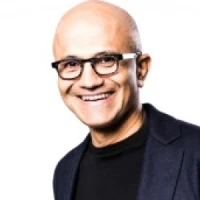
The first thing I do when I get up in the morning is a new habit I picked up, probably sometime late last year. I put my feet on the ground and say, ‘What am I thankful for?’ and ‘What am I looking forward to?’ That’s it. It’s the simplest thing, and given that it’s the first conscious act, very helpful.”
CEO of Microsoft
This section covers routines that help CEOs begin their day with momentum, clarity, and strategic alignment.
Research confirms this correlation between habit and high performance. A Harvard biologist, Dr. Christoph Randler, found that early risers tend to be more proactive, better at anticipating challenges and making sound decisions, traits essential for effective leadership.
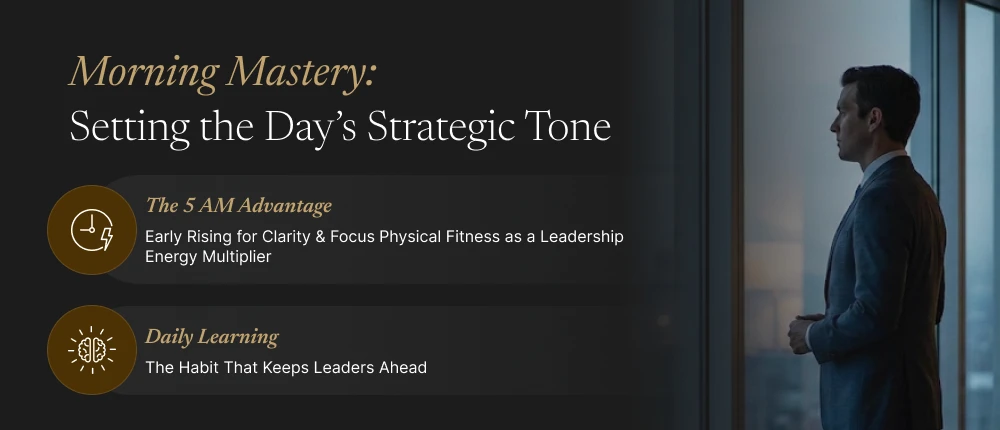
The 5 AM Advantage: Early Rising for Clarity & Focus
Early rising is more than tradition; it’s backed by studies showing benefits in proactivity, problem anticipation, and reduced decision fatigue.
In a survey of 1,086 U.S. CEOs, 64% reported waking by 6 AM, and almost 90% by 7 AM, to take advantage of quiet morning hours.
Qualitative interviews with many high-performance CEOs reveal that they use the early hours for strategic tasks, such as email triage, planning, and reflection, before team demands and interruptions begin.
The JPMorgan CEO starts his morning at 5 AM and spends two hours reading five newspapers, analyst reports, and internal bank reports, and even speech transcripts.
The benefits of early rising go beyond having more time; it offers CEOs a psychological edge. Owning the first hours of the day creates a sense of control and confidence, allowing leaders to enter the day with composure rather than reaction. Over time, this self-discipline compounds into sharper intuition, better decision-making, and more intentional leadership.
Physical Fitness as a Leadership Energy Multiplier
Physical activity has been repeatedly shown to improve cognitive function, emotional regulation, and overall resilience, qualities essential for high-level leadership.
A recent lifelog study (2025) found that moderate aerobic exercise improves mood, reduces stress, and enhances executive functions like decision-making and focus.
Various studies indicate that regular physical activity can help modulate cortisol levels and blunt stress reactivity. At the same time, acute bouts of exercise have been shown to enhance executive functions such as cognitive flexibility, working memory, and decision speed.
By making fitness a permanent part of their schedule, CEOs ensure they bring energy, stamina, and mental alertness to every conversation and decision. It’s not about physical aesthetics, it’s about being present, clear-headed, and emotionally resilient when the stakes are high.
Daily Learning: The Habit That Keeps Leaders Ahead
Effective CEOs often carve out time each day for learning, reading, listening, and updating their mental models. This supports adaptability in fast-changing environments.
These learning rituals aren't simply about acquiring information; they reflect a mindset of humility and growth. In a world where competitive advantages shift rapidly, CEOs who remain curious stay agile.
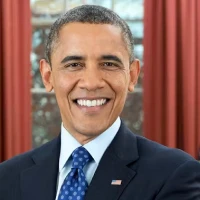
Reading helped me slow down, gain perspective, and step into others’ shoes. Whether it made me a better president, I can’t say, but it helped me stay balanced through eight intense years in a fast-moving, relentless environment.
44th president of the United State
Obama's reflection captures the essence of why deliberate learning matters for leaders; it's less about information intake and more about preserving perspective, empathy, and composure amid a relentless pace and pressure.
Mindful Leadership: Staying Centered Amid Chaos
Even with strong mornings, CEOs face high volatility, information overload, and stress. Mindfulness and mental reset habits help preserve clarity, emotional balance, and avoid burnout.
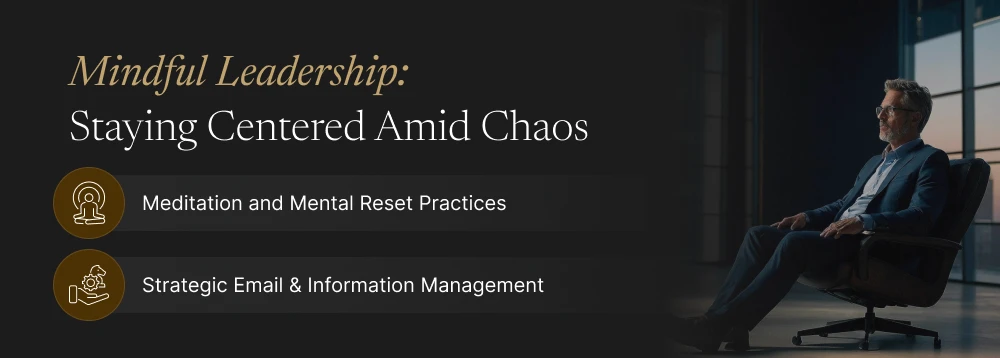
Meditation and Mental Reset Practices
Meditation and brief mental reset practices create the quiet space necessary to meet that pace with clarity. These moments of stillness, whether five minutes of focused breathing or a mindful pause between meetings, help leaders regulate their nervous system, shift from reactivity to responsiveness, and maintain composure when pressures rise.
As the insights from Calm suggest, regular mindfulness practice also sharpens focus and supports long-term emotional balance. By anchoring attention early in the day, mindful leaders can sustain concentration, reduce decision fatigue, and engage with greater empathy and patience. Over time, this habit builds a calm center of gravity that steadies leadership through turbulence.
Even simple acts like a mindful walk, a moment of silence before opening emails, or reflective journaling can serve as powerful resets. They remind leaders that how they show up determines how the organization follows.
Strategic Email & Information Management
Information overload is one of the biggest drains on executive attention. Managing information strategically protects mental bandwidth for what matters most.
The “Crisis‑Ready 30‑30‑30 Model” described in recent CEO routine research argues for structuring early morning into focused slots for scanning information, drafting decisions, and triaging communication to avoid reactive overload.
Time and Relationship Mastery: Leading With Intent
Mastery over time and relationships is not just about efficiency; it’s about catalytic leverage. How CEOs allocate time and build trust determines their capacity to scale influence.
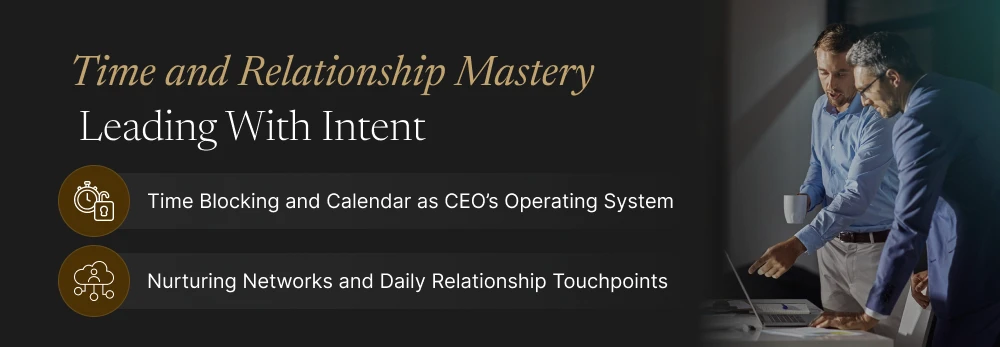
Time Blocking and Calendar as CEO’s Operating System
Time blocking turns a CEO’s calendar from a reactive diary into a strategic operating system. Instead of being swept up by meetings and interruptions, leaders design their days around high-leverage work, strategic thinking, decision-making, and reflection.
Research in cognitive psychology underscores the cost of distraction. A study by Altmann, Trafton & Hambrick found that even a few seconds of interruption can double or triple error rates in ongoing tasks. Focus is fragile, and protecting it is a leadership act.
In How CEOs Manage Time (Porter & Nohria, HBR), data from 27 top executives tracking nearly 60,000 hours revealed that the most effective leaders structure their calendars intentionally, guarding time for strategy, culture, and learning. Their schedules reflect priorities, not availability.
How CEOs Practice Time Blocking:
Block sacred hours: Reserve uninterrupted blocks for deep work or strategic thinking, often early mornings or late afternoons. Treat these as immovable meetings with yourself.
Theme your days: Designate certain days for specific types of work, e.g., “People Mondays,” “Strategy Wednesdays,” “Investor Fridays.” This minimizes context switching and clarifies focus.
Protect reflection time: Add 30-minute buffers between meetings for note-taking, review, or short walks. This converts transitions into renewal moments.
Audit weekly patterns: Review your calendar every Friday to see where time slipped toward the urgent instead of the important, then recalibrate.
When leaders treat their calendars as strategic assets rather than reactive logs, they reclaim control of their attention. That structure creates freedom to think clearly, to lead deliberately, and to create lasting value rather than being consumed by the immediate.
Nurturing Networks and Daily Relationship Touchpoints
Relationships, not authority, sustain leadership. The best CEOs understand that trust, alignment, and influence are built in the small moments between big decisions. A short call to a regional head, a personal note to a rising leader, or a few minutes of genuine listening can often do more for culture than a town hall.
Research on CEO behavior diaries shows that leaders who consciously allocate time for relational engagement, brief check-ins, informal conversations, or mentoring moments correlate strongly with higher firm performance. Another study on CEO relational leadership found that such habits directly fuel innovation by strengthening top-team dynamics and communication flow.
The most effective CEOs treat these interactions as strategic rituals, not calendar fillers. They protect them the same way they guard strategic work. So how do leaders do it:
Schedule deliberate connection windows: Set aside 10–15 minutes each day for a touchpoint with a key stakeholder, client, or team member.
Rotate networks: Reconnect with peers, mentors, or emerging leaders outside your usual circle to keep perspectives fresh.
Lead with intention: Use these conversations not for updates, but to listen, reflect, and uncover emerging themes.
Reflect monthly: Ask yourself, who haven’t I reached out to, and why?
Beyond the organization, CEOs also need environments that renew perspective and expand their peer networks in meaningful ways, spaces where genuine exchange replaces surface-level networking.
Imperium executive retreats bring leaders together with global experts and peers in extraordinary locations. These retreats stretch perspective and sharpen leadership impact.
The next Imperium retreat, “Leading the Change: Foresight for a Shifting World,” takes place in Mallorca, Spain (20th–24th May 2026). It’s a private, small-circle gathering designed for senior executives, with a limited cohort and global faculty. The focus is not networking noise, but clear thinking, foresight, and the kind of peer dialogue leaders rarely get inside the quarter.
Reflection and Renewal: Protecting What Matters
Performance gains are unsustainable without rest, reflection, and renewal. These habits ensure leadership remains grounded, resilient, and forward‑looking.
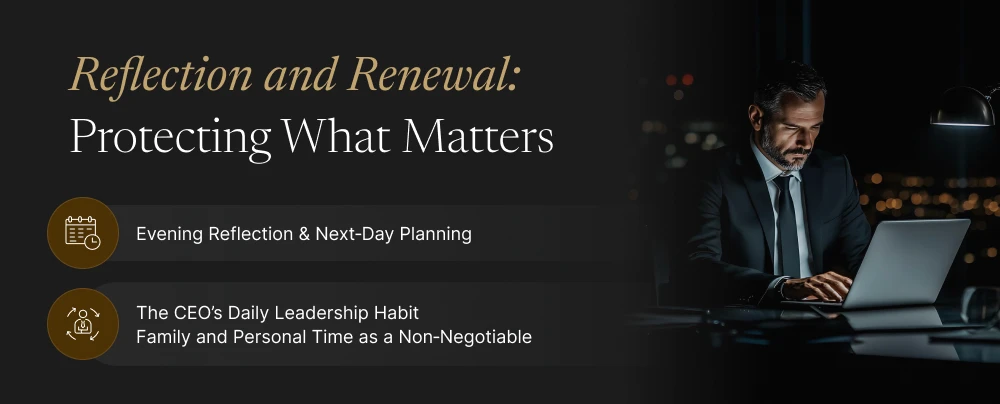
Evening Reflection & Next‑Day Planning
Reflection transforms experience into insight, and intentional planning pre-commits focus before the world competes for it.
Research consistently shows that forward-focused reflection, capturing priorities and unresolved items before rest, reduces cognitive load and enhances clarity. Additionally, reflective practice has been shown to improve decision-making and long-term alignment with strategic goals.
This reflection practice will lessen about journaling and more on closure. Like spending 10‑15 minutes each evening writing brief reflections: what went well, what could improve. Listing 2‑3 top priorities for the next day; crystallize what must get done vs what can wait.
This small act of mental bookkeeping prevents unresolved thoughts from following leaders into their rest, ensuring they begin the next day anchored, focused, and already one decision ahead.
Delegate and Trust: The CEO’s Daily Leadership Habit
Delegation, at the highest level, is less about offloading work and more about multiplying leadership. It frees the CEO to focus on what only they can do while allowing others to grow into what they’re capable of.
Research shows that when leaders involve teams in decision-making and support their development, it drives stronger performance, psychological ownership, and organizational resilience.
The most effective CEOs begin each day by identifying “only you” tasks vs tasks that can be delegated; assign clearly and empower.
They set clear outcomes, establish accountability, and then step back, focusing on progress and results rather than process minutiae.
Over time, this habit builds a culture of trust and capability, where leadership isn’t centralized but distributed, and the organization learns to think and act with shared conviction.
. Family and Personal Time as a Non‑Negotiable
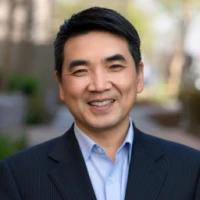
“I tell our team, ‘Guys, you know, there’s no way to balance. Work is life, life is work. However, whenever there’s a conflict, guess what? Family first. That’s it.”
Former CEO & Executive Chairman / Google
For many CEOs, the idea of “balance” often feels unrealistic. The calendar rarely cooperates, and the business never stops. Yet Yuan’s words capture a deeper truth: strategic leadership isn’t about perfect balance; it’s about clarity of priority. When family consistently comes first, everything else falls into perspective.
The CEOs who protect time for family or personal meaning don’t just recharge, they recalibrate. They return to work more centered, empathetic, and anchored in what matters most. Presence at home reinforces presence at work. Protecting that time isn’t a retreat from leadership; it’s what keeps leadership human, enduring, and worth following.
Elon Musk – Engineering Focus and Ruthless Time Discipline
As the CEO of Tesla, SpaceX, Neuralink, and xAI, Elon Musk is widely recognized for his ability to operate at scale across multiple high-impact ventures. Behind this extraordinary output lies a set of tightly structured daily habits that emphasize time control, focus, and task prioritization.
Musk is known for using extreme time-blocking, often scheduling his day in five-minute increments. This granular control enables him to switch rapidly between engineering reviews, design meetings, strategic planning, and problem-solving without sacrificing depth in any of these domains. This habit reflects a mindset of high intentionality: only what truly matters earns space on his calendar.
He also minimizes cognitive distractions. Musk rarely attends unnecessary meetings and has publicly advised teams to exit any meeting where they are not adding value, a bold move that reinforces clarity, autonomy, and respect for time.
Interestingly, while his schedule is intense, Musk also places a surprising emphasis on sleep, recognizing that rest is essential for mental performance. In interviews, he has shared that getting 6 to 6.5 hours of sleep per night is optimal for his cognitive sharpness and emotional regulation.
“Time is the one thing you can’t buy. I try to use mine wisely,” - Elon Musk |
Musk’s habits embody a leadership style that’s built on ruthless prioritization, cognitive bandwidth management, and systemized discipline, a powerful contrast to reactive or overloaded executive behavior.
Conclusion
The most effective CEOs don’t run on motivation. They run on systems: repeatable habits that protect attention, energy, and judgment when the pressure doesn’t let up. Early focus, daily learning, tight information control, time blocking, and reflection aren’t productivity hacks. They’re the infrastructure that keeps leadership steady when the environment isn’t.
The goal isn’t to copy someone else’s routine. It’s to build a cadence you can sustain, review it before drift sets in, and keep refining it as your context changes.
If your days feel reactive, that’s not a character flaw. It’s a sign your operating system needs an upgrade. Start with one habit, make it easy to repeat, and only add the next once the first is automatic. Over time, the system carries you.
FAQs
1. What time do most successful CEOs wake up?
Accordion content
2. How do CEOs manage stress and maintain focus?
Accordion content
3. Is daily exercise really essential for CEO performance?
Accordion content
4. Why do CEOs focus so much on learning and reading?
Accordion content
5. What is time blocking, and why is it important for CEOs?
Accordion content
6. How do CEOs maintain work-life balance?
Accordion content

Vrisha Rongala

Ms. Vrisha Rongala is the Chief Growth Officer at Edstellar, where she leads brand and growth strategy. She began her career at JWT and Saatchi & Saatchi, working on campaigns for global brands including Infosys and Microsoft. At Edstellar, she has shaped the company’s identity and strengthened its enterprise presence as a one-stop talent development partner. She now leads Imperium, an executive strategy retreat for CEOs and founders focused on clear thinking and peer-level dialogue.
Search
Popular Posts
Related Post

Vrisha Rongala
/
Chief Growth Officer
Executive Resilience
Feb 25, 2026
Vrisha Rongala
/
Chief Growth Officer
Executive Resilience
Feb 20, 2026

Vrisha Rongala
/
Chief Growth Officer
Leadership Development
Feb 18, 2026